Sunday, May 19, 2013

Belgium's Two Nuclear Reactors with Cracks Are Good to Restart, Minister Says Government Does Not Have Power To Interfere with "Independent" Regulator and Operator


These days, things nuclear look almost serene compared to the (soap) scums in the political world (here and here in Japan, here and here and here in the US, for some examples).

But that's probably because political scums are used to mask problems that cannot be fixed.

Belgium, having to rely on nuclear power for more than 50% of electricity, has declared two reactors safe to operate whose Reactor Pressure Vessels were found with thousands of small cracks in August 2012 (see my post for one of them).

Why? Because there is no way to fix the cracks now (besides, the company that made the vessels went out of business), and Belgium needs electricity.

From Reuters (5/17/2013):

UPDATE 1-Belgian regulator clears GDF to restart nuclear reactors

* A third of Belgium's nuclear capacity closed since last yr

* Reactors should restart in 2-3 weeks (Recasts with regulator confirmation)

By Philip Blenkinsop

BRUSSELS, May 17 (Reuters) - Belgium's nuclear safety regulator has given approval for GDF Suez to restart two nuclear reactors closed last year over safety concerns, it said in a report on Friday.

"The Federal Agency for Nuclear Control considers that the Doel 3 and Tihange 2 reactor units can be restarted safely," the report said.

It added that all of the safety concerns had been resolved satisfactorily.

Belgium halted the 1,006-megawatt (MW) Doel 3 reactor in August last year after indications of cracks were discovered on the core tank during ultrasound checks.

A month later, it found similar flaws on the 1,008-MW Tihange 2 after it tested the tank during a routine stoppage, leaving Belgium without a third of its nuclear power generation capacity.

It will take two to three weeks to restart the reactors, a spokeswoman for GDF Suez's Belgian division Electrabel said following the decision.


According to Asahi Shinbun who reported the news in Japan, Doel 3 reactor has over 8,000 small cracks, and Tihange 2 has over 2,000. They conducted the tolerance test to ensure safety, according to Asahi.

Greenpeace is vowed to sue the Belgium government, according to Euronews (5/17/2013):

Greenpeace are threatening to sue the Belgian government. The leading environmental activist network is threatening legal action after Belgium’s nuclear safety regulator gave the green light to GDF Suez to go ahead and restart two nuclear reactors.

However, during a news conference, the Belgian Interior Minister, Joelle Milquet claimed that the government does not have the power to block the move.

The independent regulator provides technical advice to an operator on the restarting of its operations. We do not have the ability to interfere in the decision, because it is an independent operator,” he said.

Last year two nuclear reactors were closed after safety concerns were flagged up in their their tanks, during an ultrasound check.

Greenpeace says it is the government’s responsibility to guarantee the safety of the Belgian people.

“We will summon the government for the lack of decent emergency plan and at the same time they increase the risks of a nuclear accident,” says Greenpeace Belgium energy campaigner Eloi Glorieux.

So while a legal battle may be brewing reactors, Doel 3 and Tihange 2 could be back up and running within 3 weeks, now that Belgium’s nuclear watchdog claims all issues have been resolved.


What does the minister mean, the government does not have the power to block the move? Ensuring the safety of things like nuclear reactors is one of the few remaining good things that a government should do.

In contrast, Switzerland's Mühleberg Nuclear Power Plant has a huge crack in the core shroud inside the Reactor Pressure Vessel, and the license to operate is set to be withdrawn by the court order in June this year.

#Idiosyncratic Japan: Business Is Good at Tokyo's "Soaplands", and They Call the Boom "Awa (Soap Bubble) nomics"


Ahhhhh this can't be happening......

As Boy-wonder speaks of Japanese sex industry as solution to Marines in Okinawa and doubles down on his "opinion" that comfort women were necessary and they were no sex slaves and everyone did it, The Economist magazine puts wrinkled Abe as a superman of some sort flying over Tokyo accompanied by two Japanese fighter jets, and puts out an article titled "Japan and Abenomics: Once more with feeling" with the opening paragraph talking about price hike at "soapland" outfits in Tokyo that offer sexual massage.

Welcome to "Awanomics". ("Awa" is bubble, as in soap bubble used in the soapland massage.)

From The Economist (5/18/2013):

Japan and Abenomics: Once more with feeling

The Shinzo Abe shaking up Japan’s economy seems a different man from the one whose previous premiership was marked by nationalistic posturing. He isn’t

IN “SOAPLAND”—Sopurando, a Tokyo red-light district—the price of a basic half-hour “massage” has recently gone up for the first time since 1990. Demand for the top-end, “highly technical” massage service, costing ¥60,000 ($600) a go, has also been soaring, according to Akira Ikoma, editor of My Journey, which covers the sex industry. He says it is all thanks to the surging stockmarket.

In Sopurando they are cheekily calling this reinvigoration “awanomics”, from awa, meaning bubble or lather. Elsewhere in Japan they call it Abenomics in honour of Shinzo Abe, elected prime minister in December 2012. Japan, Mr Abe declared as he took office, was back, and he lost not a moment in proving it. Having quickly assembled his cabinet, in January he announced a ¥10.3 trillion fiscal stimulus.

(Full article at the link)


The article even has a Japanese Self Defense Force ship with the rising-sun flag of the imperial navy (which is still used as the naval ensign of the SDF). It had been used before the Meiji government adopted it as military flag, but it is widely regarded in Asia in particular as the symbol of Japanese aggression (which Boy-wonder's sidekick and Governor of Osaka Prefecture wants it precisely defined).

The somewhat light-hearted, Keynesian article still ends somewhat ominously:

The emperor’s new constitution

Some amendments to the 1947 constitution, such as one acknowledging Japan’s clear right to a standing army, navy and air force, are now broadly popular. But it is becoming clear that Mr Abe and the traditionalists, pining for an imperial era from which most of the country has moved on, aim to go further than that. They want, among other things: the emperor to be restored as head of state; collective duties emphasised over individual rights; and veneration for the family unit. As a precursor to such changes, the LDP plans to make it easier to amend a constitution which so far has never been altered. The current process requires a two-thirds majority in each house, plus a national referendum.

At best, all this could prove a distraction at a time when some structural-reform initiatives already appear to be running into the sands. At worst, it could endanger all reform by eroding the government’s popularity, at the same time increasing tensions with Japan’s neighbours. Far from having banished the ghosts of his past, as some of his advisers claim, the prime minister is in danger of summoning them up again.


The section title is a pun on Hans Christian Andersen's "The Emperor's New Clothes", I believe. Not good at all...

Saturday, May 18, 2013

"Comfort Women" Controversy: Mayor Hashimoto to Hold a Press Conference at the Foreign Correspondents' Club of Japan


Mark your calendar. It will be on May 27, 2013.

Boy-wonder doubles and triples down on his remarks that "comfort women" were necessary, that everybody did it, and that his remarks were misunderstood by foreigners because he can't speak English because of Liberal Democratic Party.

(Huh?)

According to the world of Toru Hashimoto, mayor of Osaka City and co-president of Japan Restoration Party, these women were "pros", and not "sex slaves". Tell that to the Japanese, Korean, Chinese, Dutch, Philippino, and other women in Japan-occupied Asia from that time.

Kyodo News has a tepid coverage of Hashimoto's plan, and reduces everything to "difference of opinion".

From Kyodo News (5/19/2013):

橋下氏、特派員協会に説明の考え 慰安婦問題、性奴隷を否定

Mr. Hashimoto will explain the issue of comfort women at the Foreign Correspondents' Club, denies they were sex slaves

 日本維新の会共同代表の橋下徹大阪市長は19日の民放番組で、旧日本軍の従軍慰安婦について「暴行、脅迫、拉致を、国を挙げてやり、嫌がる女性に無理やり(慰安婦を)やらせた『性奴隷』と言われている。それは違う」と述べ、27日に東京で外国特派員協会に対し、こうした見解を説明する考えを示した。

Toru Hashimoto, mayor of Osaka City and co-president of Japan Restoration Party, appeared in a TV program on May 19, and talked about the comfort women of the Japanese imperial army. He said, "It is said that the whole nation raped, threatened and abducted these women and forced them against their will to become (comfort women) and thus "sex slaves". But that's not true." He said he will explain his opinion at the Foreign Correspondents' Club of Japan in Tokyo on May 27.

 既に来日し、24日に橋下氏と面会する韓国人の元従軍慰安婦は「経験した本人がいるのに、どうして証拠がないと言えるのか」と橋下氏の一連の発言を批判しており、見解の相違が際立った格好だ。

A Korean former comfort woman, who is already in Japan to meet with Mr. Hashimoto on May 24, criticizes Mr. Hashimoto's remarks, saying "I experienced exactly that. How can he say there is no evidence?" It seems to highlight the difference of opinion.


There are an amazing number of Japanese who staunchly support Boy-wonder. They all cling on to the semantics, and seem to think these women were willing prostitutes selling themselves for money. Here's one example of the tweets I get:

Hashimoto is doing the politics of words. He's challenging the existing framework of the US being always right.


What does that have to do with forced slavery under the Japanese imperial army?

Boy-wonder's latest excuse is that he didn't know enough about "US adult entertainment (sex) industry" when he talked to the Marine base commander in Okinawa and suggested to him that Marines make good use of Japanese sex industry.

This is a "Young Global Leader" elected by the world elite who meet at Davos every year.

What a wonderful world.

Reuters: There Is No Plan B for Japan, as Abe Bets the Whole Country on His Economic Programs Dubbed "Abenomics"

Japan’s Prime Minister Shinzo Abe in the cockpit of T-4 training jet at the Japan Air Self-Defense Force base in Higashimatsushima, Miyagi prefecture, May 12, 2013. REUTERS/Kyodo


Tank commander was clearly not enough. What's next? A battleship captain?

Good luck, Japan. You'll need it. Even that won't help you much with the leader like this.

From Reuters Opinion page, by Anatole Kaletsky (5/17/2013; emphasis is mine):

The 3.5 percent gross domestic product growth announced by Tokyo Wednesday suggests that Japan may be the fastest-growing economy in the G7. Since the Tokyo stock market hit bottom exactly six months ago, the Nikkei share index has soared almost 80 percent. Meanwhile, the yen has experienced its biggest six-month move against the dollar. All these events appear linked to the election of Shinzo Abe and the regime he has installed at the Bank of Japan.

Even after 20 years of stagnation, Japan remains the world’s third-largest economy, with a 2012 GDP of $6 trillion, equal to France, Italy and Spain combined. Financiers, business leaders and economists everywhere are starting to ask the obvious question: Is Japan finally taking the truly radical action required to fix its economy and end its “lost decades”?

This, however, is the wrong question. It confounds two very different issues – which need to be carefully distinguished to understand what’s happening in Japan.

The first question is whether Japan is truly committed to actions far more radical than anything attempted in the past 20 years. The second question is whether these actions, if pursued with determination and persistence, will fix Japan’s economy.

The first question was answered with a clear “yes” in March, when Abe appointed Haruhiko Kuroda as the governor of the Bank of Japan. Kuroda is an independent thinker, light-years from the consensus-seeking bureaucrats who have dominated Japanese policymaking for 20 years.

Kuroda demonstrated this immediately, in his first meeting of the BoJ council. He announced a monetary stimulus of staggering proportions – roughly three times larger, relative to the size of the Japanese economy, than the Federal Reserve’s quantitative easing in the United States.

But that still leaves the second question: Will Japan’s unprecedented macroeconomic expansion succeed in delivering the hoped-for economic growth? The answer is “maybe.”

Most bottom-up analysts, economists and investment analysts, who study companies and industrial sectors in detail, put the probability of success at well below 50 percent. Japan, after all, has profound structural problems: a shrinking population, misallocation of investment, enormous public debt, protectionist lobbies in service industries and agriculture, inflexible labor practices, unimaginative management – the list could go on. None of these can be fixed by monetary policy.

Why, then have stock market investors turned so bullish? Because top-down investors, who seek to profit from macroeconomic trends, have ignored the skepticism of bottom-up investors. To see why they have done this – and why they may be right – let us return to my two questions.

Bottom-up analysts, who think mostly about structural issues, quite reasonably argue that macroeconomic policies, however bold, will not help Sony invent the next iPhone. They will not turn frugal pensioners into spendthrifts or stop Japanese companies from hoarding profits instead of distributing excess cash to shareholders through higher dividends or to workers through higher wages.

Macro-investors, on the other hand, see unprecedented fiscal and monetary expansion as a good enough reason to buy Japanese equities and sell the yen. But if bullish macro-investors keep acting on Japan with enough conviction, they could change Japanese economic reality and win their intellectual contest with skeptical bottom-up analysts.

(In other words, exactly the same forces that have been driving the US stock market up so much that even the financial cheerleaders at CNBC are voicing concerns that the market does not reflect the main street at all. But then who cares about the main street, other than people on the main street? Now, onward with the article's conclusion part...)

Finally, the macroeconomic stimulus of the past few months is only the beginning, not the end, of the Abe program. Abenomics has been described as a quiver with three arrows – fiscal stimulus, monetary expansion and structural reform. The third arrow will be fired only if Abe wins the Upper House election in July.

After that election, Abe is almost certain to make structural reforms in areas such as international competition, female labor participation, employment deregulation, lower energy prices and corporate taxation. These reforms will likely meet with opposition from powerful political lobbies. But some, at least, are almost certain to go ahead.

The reason is that Japan will have no choice. The fiscal and monetary expansion started in the first few months of Abenomics has been so extreme that there is no turning back. Unless Japan can achieve much faster economic growth, Abe’s radical experiment with macroeconomic stimulus will create a debt and monetary overhang so huge that it will bankrupt the financial system and possibly trigger hyper-inflation.

In short, Abe has bet his country on the success of his economic program. He will now be forced to do whatever it takes to achieve strong growth, both through macroeconomic stimulus and structural reform.

The financial arithmetic of Abenomics means that tolerable stagnation is no longer an option for Japan.


The Abe administration seems to think the economy will grow if female labor participation goes up. They look at the statistics in other countries, and see the statistical significance (I don't think so, but they do) as the causality. How are they going to lower energy prices with the falling yen? Who knows? Nobody cares, particularly not those "macro" investors - i.e. Goldman Sachs and J.P.Morgan Chase. "Macro" means nothing but government policies these days, and no one is more proficient in "macro" investment than these two.

There is no "Plan-B", as Abe bet the whole country on the success of his pet project that he says he polished over those years after he resigned from the premiership till his party's win in 2012 December election.

For the likes of Abe, if his pet project ends in an unmitigated disaster that finally sinks the country (and a good chunk of the world economy with it - after all, Japan is still the third largest economy), that will be probably OK as long as his name will be associated with the disaster, making history.

Thursday, May 16, 2013

(OT) Ancient Airs and Dances, Suite No.3 by Ottorino Respighi


Boston Symphony Orchestra conducted by Seiji Ozawa, excellent interpretation - lyrical but not overly dramatic, clean.

(I am playing this on Friday night (second violin, principal), and have been busy doing the rehearsals. Sorry I haven't been able to post much because of that.)

US State Department's Response to Osaka City Mayor Hashimoto: "Outrageous and Offensive", with Transcript Footnote Showing Disgust to Asahi Reporter's Question


A reporter from Asahi Shinbun went to the daily briefing at the State Department on May 16, 2013 and asked questions to the spokesperson Jen Psaki.

What do you think of Mayor Hashimoto's comments?

What do you think, were those women "comfort women" or "sex slaves"?

(Oh boy.)

From the US Department of State Daily Briefings transcript for May 16, 2013:

QUESTION: Hi, my name is Takashi from Japanese newspaper Asahi. Osaka City Mayor Hashimoto recently made a comment on the so-called “comfort women” issue, arguing that even though it is unacceptable from the moral perspective value, but the comfort women were necessary during the war period. And he also argued that it is not fair that only Japan is criticized by the United States and other countries, because there are other country military that were provided sexual service by prostitute. And do U.S. has any position on his comment or criticism against the United States?

MS. PSAKI: We have seen, of course, those comments. Mayor Hashimoto’s comments were outrageous and offensive. As the United States has stated previously, what happened in that era to these women who were trafficked for sexual purposes is deplorable and clearly a grave human rights violation of enormous proportions. We extend, again, our sincere and deep sympathy to the victims, and we hope that Japan will continue to work with its neighbors to address this and other issues arising from the past and cultivate relationships that allow them to move forward.

QUESTION: Do you describe this issue sex slave or comfort women?

MS. PSAKI: Again, I don’t know that I’m going to define it. You kind of laid out the specific details there, and we have described this issue in the past as comfort women[ii].


What is the footnote ii? Well I am afraid even the Asahi reporter managed to piss off the State Department (emphasis below is mine):

[ii] Rather than focusing on the label placed on these victims, we prefer to address the fact that this was a grave human rights violation of enormous proportions. The United States is also committed to working with our partners and allies around the world to denounce modern-day slavery and trafficking in persons no matter where it occurs.

これらの被害者につけられたラベル[慰安婦(Comfort women)か性の奴隷(Sex slaves)か]にこだわるよりも、私たちは、これが、重大で恐ろしく大規模な人権の蹂躙であったという事実に向き合う[事実を扱う]方を好む。アメリカ合衆国はまた、世界のパートナーや同盟諸国と共に、世界のどこであろうと現在存在する奴隷制度、人身取引を強く非難する。


I couldn't believe it until I read several articles by the Japanese media and tweets by some Japanese, but some people in Japan do seem to think if those women were called "comfort women", somehow they were part of the legitimate business. And they are shocked that foreign media portrays these women as "sex slaves". Thus the Asahi reporter asked that question.

If you start to believe in your own shit (often called "tatemae" in Japanese, literally "a facade"), you are toast. But many Japanese do not even know that any more. Lost art of tatemae and honne.

Wednesday, May 15, 2013

US NRC Chairman Allison M. Macfarlane: Life after #Fukushima - “The New Normal”


I guess Ms. Macfarlane probably doesn't know that the word "New Normal" was coined by PIMCO's co-president Mohamed A. El-Erian, as she doesn't give any credit to PIMCO when she quotes the word...

El-Erian's "New Normal" is the phrase he coined in 2009 to describe the post-Lehman world of slow economic growth, high unemployment and high government debt.

In Macfarlane's "New Normal", she says that "public interest in nuclear power, whether positive or negative, remains heightened."

So what exactly is her definition of "New Normal" in nuclear industry regulation, other than to say "In the months and years ahead, we should continue to consider “the new normal,” and assess the nature of the influence Fukushima will have on our daily work"?

Continue to consider?

Well I haven't had time and patience to read the 5-page statement yet, but you can read her entire prepared statement at the Nuclear Energy Institute (NEI) Nuclear Energy Assembly on May 14, 2013, here.

Feel free to leave the summary in the comment section.

In early April this year, NRC effectively ditched the idea of filtered vent (a la Sir Humphrey, "further study is needed").

Monday, May 13, 2013

Groundwater Pump and Release from #Fukushima I Nuke Plant: Fukushima Fishermen Want Safety Assurance from Government, and Goverment Is Set to Give That Assurance


Another reason for TEPCO's shares jumping 18% in the morning session at Tokyo Stock Exchange is this:

TEPCO may get to release groundwater into the ocean soon.


From Jiji Tsushin (5/14/2013):

茂木敏充経済産業相は14日の閣議後記者会見で、東京電力による福島第1原発の地下水放出が地元の懸念から先送りになったことについて、「関係者の了解を得ることが前提であり、国としても説明を尽くしていきたい」と述べた。地下水の放出については、汚染水抑制の観点から「極めて重要だ」と指摘した。

Minister of Economy, Trade and Industry Toshimitsu Motegi commented in the press conference after the cabinet meeting on May 14 on the release of groundwater from Fukushima I Nuclear Power Plant [to the ocean] which has been postponed because of the concern from the locals, and said, "Obtaining the approval from those involved would be the prerequisite, and the national government will do its best to explain [to the locals]." As to the release of groundwater, he said "it is extremely important" from the standpoint of reducing the amount of contaminated water.


Why is Motegi saying this? Because that's what the Fukushima fishermen have said they need the government's assurance that the water is safe.

In other words, they will agree to the scheme as long as the national government tells them it is safe.

Trust in the government continues to run supreme in Fukushima after two years of pathetic performance by both the national government and the prefectural government when it comes to dealing with the accident and resultant contamination.

Also from Jiji Tsushin, from yesterday (5/13/2013):

福島県漁業協同組合連合会(県漁連)は13日、同県いわき市で県漁協組合長会議を開き、東京電力が福島第1原発の汚染水増加対策として敷地内で地下水をくみ上げ、海に放出する計画について協議した。地下水は原子炉建屋で放射性物質に汚染される前の水で、東電は理解を求めたが結論は出ず、6月以降に改めて協議することになった。

The Federations of Fishery Cooperatives in Fukushima Prefecture held a meeting of the cooperatives presidents in Iwaki City in Fukushima on May 13 to discuss TEPCO's plan to draw groundwater in the plant compound and release it into the ocean as part of countermeasures against the increase of contaminated water at Fukushima I Nuclear Power Plant. The groundwater is the water before it enters the reactor buildings and gets contaminated with radioactive materials. TEPCO asked for understanding, but no agreement was reached. They will meet again in June.

 県漁連の野崎哲会長は終了後、記者団に「地下水と汚染水を混同している漁業者もいる」と述べ、さらなる説明を東電に求めた。また、国に対して「(国が)了承したということを明確にしてもらわないといけない」と語った。

Tetsu Nozaki, president of the Federations of Fishery Cooperatives in Fukushima Prefecture, said to the press after the meeting, "There are fishermen who are confusing the groundwater with the contaminated water", and asked for further explanation from TEPCO. He also said, "We need to know clearly that (the national government) has approved [the plan]."

 会議には県内の漁協幹部のほか、水産庁や県の担当者が出席。東電の新妻常正常務が改めて計画を説明した。東電は安全性に問題はないとしているが、漁業者から風評被害を懸念する声が上がっている。

The meeting was attended by the senior members of the Fishery Cooperatives in Fukushima and the officials from the Fisheries Agency and Fukushima prefectural government. TEPCO's executive director Tsunemasa Niizuma explained the plan. There is no problem with safety, according to TEPCO, but fishermen are worried about damages from baseless rumors.


There you go. For the mayor of Iwaki City, his out is that he objects to the release of groundwater "at this point" (see my previous post on the topic). For the Fukushima fishermen, as long as the national government vouches for the safety of the water released, they will be OK with the plan. Just blame the fickle and ignorant consumers, as they've been doing for the past two years.

TEPCO seems to be trying to keep the water level in the reactor building basements at about O.P. (Onahama Peil) +3000 (or three meters above the standard sea level used for the plant), so that it is groundwater that's flowing into the basement instead of highly contaminated water flowing out of the basement.

Judging by the high, and increasing bioconcentration of radioactive materials in the fish inside the plant harbor, contaminated water from somewhere may be already leaking into the ocean anyway. That news died quickly.

Now with this cleaner water dump, TEPCO may be able to hasten the dilution of radioactive materials in the harbor.

TEPCO's Stock Jumps 18% Thanks to PM Abe's Word That They Shouldn't Be the Only Ones Responsible for the Accident Cleanup


The reason for the jump is given in the Yomiuri article in the morning of May 14, 2013 (part):

安倍首相は13日の参院予算委員会で、福島第一原子力発電所の事故を起こした東京電力に対して、「(賠償や廃炉などの問題)すべてを東電に押しつけるのは間違っている。国がしっかりと前面に出て、取るべき責任を果たす」と述べた。

In the Upper House Budget Committee on May 13, Prime Minister Abe said about TEPCO who caused the Fukushima I Nuclear Power Plant accident, "It's wrong to foist (all the problems like compensations and decommissioning) on TEPCO. The national government will step forward to fulfill its responsibility."

Osaka City Mayor Toru Hashimoto Urges US Military Commander in Okinawa to Use More Japanese "Fuzoku" (Adult Entertainment) Establishments


In the context, "adult entertainment" is "sex for a price".

Boy-wonder, who was selected as one of the "Young Global Leaders" at Davos World Economic Forum, a confab of the rich and the powerful in the world, was visiting Okinawa.

Commander of the US Marine Corps Air Station Futenma, Colonel James Flynn, froze, according to Sankei Shinbun article.

Sankei Shinbun (5/13/2013; part):

「もっと風俗活用を」と橋下氏 凍り付く沖縄の米軍司令官

"Use more adult entertainment establishments", says Hashimoto, Okinawa Commander froze

日本維新の会共同代表の橋下徹大阪市長は13日夕、米軍普天間飛行場(沖縄県宜野湾市)を視察し同飛行場の司令官と面会した際に「もっと日本の風俗業を活用してほしい」と促していたことを明らかにした。「風俗業を活用してもらわないと、海兵隊の猛者の性的なエネルギーをコントロールできない」と伝えたというが、司令官は「米軍では禁止されている」などと取り合わなかったという。

Toru Hashimoto, mayor of Osaka City and co-president of Japan Restoration Party disclosed on May 13 evening that when he visited the US Marine Corps Air Station Futenma (Ginowan City, Okinawa) and met with the commander, he urged "more use of Japanese adult entertainment" by the US military. According to Hashimoto, he told the commander, "Unless you make good use of the adult entertainment industry, you can't control sexual energy of tough Marines." The commander ignored his suggestion, saying "it is prohibited in the US military".

 橋下氏は今月1日、同飛行場を視察。その際、司令官に「合法的に性的なエネルギーを解消できる場所が日本にはある」と述べた上で、海兵隊員に風俗業者を活用させるよう求めたという。橋下氏によると、司令官は凍り付いたような表情をみせ、「米軍では禁止の通達を出している。これ以上、この話はやめよう」と打ち切った。

Mr. Hashimoto visited the Futenma Air Station on May 1. On that occasion, he told the commander of the Station that "there are places in Japan that [the Marines] can legally release their sexual energy", and urged that the commander order the Marines to make use of adult entertainment establishments. According to Mr. Hashimoto, the commander froze, and cut off the talk by saying "The US military bans the use [of such establishments]. Let's not talk about this any more."


Boy-wonder's comment is no surprise, as he's been saying "comfort women" are absolutely necessary.

It is absolutely no surprise for the country of Japan either. After all, the country readied what was to become "Recreation and Amusement Association" in three days after the Emperor declared the end of World War II on August 15, 1945 - almost the very first thing that the defeated government did. Heroic girls and women to serve as "breakwater", and preserve the virginity of the rest of Japanese girls and women.

What a country.

Sunday, May 12, 2013

(OT) Space Oddity from International Space Station


Commander Chris Hadfield on board the International Space Station sings David Bowie's "Space Oddity":


Plant Earth is blue and beautiful.

#Radioactive Japan with Nothing Better to Do: Police and Japan Coast Guard Held Joint Anti-Terrorism Exercise to Protect #Fukushima I Nuke Plant from Terrorists


Jiji Tsushin's article has no information as to who the Police or the Coast Guard think would be the supposed "terrorists" who would attack Fukushima I Nuclear Power Plant.

Jiji Tsushin (5/11/2013):

原発テロ想定、合同訓練=警察と海保、福島第2で-特殊部隊も参加し「銃撃戦」

Police and Coast Guard held joint exercise against terrorism on nuclear plant at Fukushima II (Daini), with special force staging "gun battle"

東京電力福島第1原発をテロリストが襲撃するという想定で、警察と海上保安庁が11日、合同訓練を行った。同原発は東日本大震災で脆弱(ぜいじゃく)性が露呈し、現在も不安定な状態で廃炉に向けた作業が続いている。警備体制を不安視する声があるため、訓練を公開。テロ対策の専門部隊も参加して「銃撃戦」を交わすなど実戦さながらの訓練を披露した。

On May 11, Police and Japan Coast Guard held a joint exercise on the assumption that terrorists were attacking Fukushima I Nuclear Power Plant. Vulnerability of Fukushima I Nuclear Plant was exposed in the March 11, 2011 disaster, and work toward decommissioning is on-going today in a situation that is still unstable. The exercise was open to the public, as there are those who have expressed doubt about the security system. A special force for counter-terrorism also participated in a mock gun battle.

訓練は、第1原発から南に10キロ余り離れた福島第2原発で実施。原発に常駐する福島県警の銃器対策部隊や千葉県警の特殊部隊「SAT」など警察官約80人と、海保のテロ対処部隊ら海上保安官約70人が参加した。第1原発へのテロを想定した合同訓練は震災後初めて。

The exercise was carried out at Fukushima II (Daini) Nuclear Power Plant, about 10 kilometers south of Fukushima I (Daiichi) Nuclear Power plant. About 80 policemen from the Fukushima Prefectural Police Firearms Countermeasure Unit which is stationed at the nuclear plant and from the Chiba Prefectural Police Special Force "SAT" (Special Assault Team), and about 70 officers of Japan Coast Guard including the Coast Guard Counter-Terrorism Unit participated. The joint exercise against terrorist attack on Fukushima I Nuke Plant was the first after the March 11, 2011 disaster.


Jiji has a photo of Coast Guard officers with machine guns, dressed in black-and-yellow radiation protection gear and looking like a bee or fly, having subdued the "terrorists" on board a ship:


Let's see... To disable the plant and stop the cooling of the reactors and Spent Fuel Pools, all you need would be to release a boat-load of rats and mice and wait... Or simply wait until all those huge steel tanks that are not welded start to leak, in about 3 years. Or just continue to let TEPCO do the work and wait.


Saturday, May 11, 2013

Atomic Energy Society of Japan Survey: 70% of Nuclear Experts Say They Are Comfortable with Nuclear Power, 92% Say We Should Continue to Use Nuclear Power


Just as the stock market performance has increasingly little or nothing to do with the real economy, the nuclear experts who are the members of Atomic Energy Society of Japan feel more confident about nuclear power while ordinary people continue to feel uneasy and threatened, 2 years after the worst nuclear accident in Japan which is still on-going.

The Mainichi article below speculates that the experts may have regained confidence after the LDP win in the Lower House election in December last year. If that's the case, well they are not scientists, but politicians.

As far as I am aware, there has been very little soul-searching, so to speak, after the Fukushima I Nuke Plant accident by the members of Atomic Energy Society of Japan (and who make up the so-called "nuclear village"), nor active participation by the members in solving the many problems that TEPCO has been dealing with (albeit ineffectively) since the day 1 of the accident.

They have been lying low, but now that LDP has put the restart of nuclear power plants in the election promise for the Upper House election in July, they should be more confident.

Mainichi English (5/8/2013):

70% of nuclear experts still 'comfortable' with atomic power: survey

Some 70 percent of nuclear energy experts with the Atomic Energy Society of Japan (AESJ) remain "comfortable" with atomic power, while at the same time public confidence in the technology remains low, a society survey has revealed.

The AESJ began the annual survey of its members in fiscal 2006, and of the general public in fiscal 2007. The fiscal 2012 survey, conducted in January and February this year, queried 500 randomly selected residents of the Tokyo region and 559 AESJ members at universities and in the private sector.

In the fiscal 2010 survey, 86.5 percent of AESJ members queried said they were either "comfortable" or "somewhat comfortable" with atomic power generation. In the fiscal 2011 survey -- conducted after the March 2011 Fukushima No. 1 nuclear plant meltdowns -- that figure dropped to 62 percent, but bounced back to 69.2 percent for fiscal 2012.

Meanwhile, only about 25 percent of the 500 members of the public agreed or somewhat agreed that Japan should keep using atomic power -- around the same rate as in the 2011 survey and half that of before the Fukushima nuclear disaster. Asked if Japan should keep using atomic power, some 92 percent of AESJ members said yes -- 6.6 points higher than in the fiscal 2011 survey and close to the pre-disaster level of around 95 percent.

"The Liberal Democratic Party (LDP) included continuing atomic power in their election promises last year and won a huge victory, so I think nuclear experts might have regained some of their confidence in the technology," Kansai University professor of social psychology Shoji Tsuchida said of the survey results. "But it would be a mistake for them to think that the election results mean the public has signed off on nuclear energy."


For some unknown reason, Mainichi English drops the reference to the percentage of ordinary citizens who are comfortable with nuclear power. According to Mainichi Shinbun's Japanese article,

一方、市民は10年度の18・6%が5・2%(11年度)に下がり、12年度も6%と低下したままだ。

On the other hand, 18.6% of citizens answered they were comfortable with nuclear power generation in the fiscal 2010. The number dropped to 5.2% in the fiscal 2011, and it remains low at 6% in the fiscal 2012.

Even before the Fukushima accident, most citizens were not comfortable with nuclear power. But they were told it was good for them and good for the planet Earth, and were told it was unscientific and unreasonable to fear the nuclear power.

About the experts confidence, Mainichi English says it is the "confidence in the technology". But that cannot be inferred from the original Japanese, which simply says:

原発利用継続を公約した自民党が圧勝したことで、専門家は自信を回復したのかもしれない。

Because of the huge victory by LDP who promised continued use of nuclear power plants, the experts may have regained their confidence.


I think it is the confidence in themselves.

OT: Obama's Press Secretary's Fine Performance of Non-Answer on Benghazi


Obama White House spokesman Jay Carney answers questions from reporters with facts and details totally unrelated to the questions, and the reporters are left wondering what in the world they just heard and why, forgetting to press for real answers. Classic.

"Terms of reference". Sir Humphrey Appleby would be proud.

From White House Dossier by Keith Koffler (5/9/2013):

Internal Benghazi Review Ignored Clinton, Obama

The internal State Department Accountability Review Board report being touted by the White House as an “unsparing” investigation into the Benghazi response actually completely spared the two individuals whose actions Republicans want to know about most: President Obama and former Secretary of State Hillary Clinton.

There is no mention in the report of the what Clinton or Obama did related to Benghazi. In fact, Obama isn’t mentioned at all in the document, and Clinton only once – in the context of her appointing the Review Board. There is no suggestion that Clinton or Obama were interviewed or even examined by the investigation.

What’s more, Accountability Review Boards are part of statutory State Department process that is not legally permitted to investigate the president.

It’s not even clear that an Accountability Review Board is permitted to probe the Secretary of State. The purview of a Review Board covers “employees” of the State Department who could be subject to discipline by the Secretary of State, who presumably would not be tasked to discipline herself.

Despite all this, White House Press Secretary Jay Carney Wednesday suggested the Review Board report exculpates Clinton.

From the briefing:

Q    So the White House is confident that Hillary Clinton acted appropriately throughout this process?
MR. CARNEY:  We are.  And I think I would point you to the Accountability Review Board and what –
Q    Which didn’t –
MR. CARNEY:  I think I would point you to the report the put out.  I would point you to what the two heads of that board, Ambassador Pickering and Admiral Mullen — each highly praised by both sides of the aisle for their long, distinguished careers — put out in a statement this week:  “From the beginning of the ARB process, we had unfettered access to everyone and everything, including all of the documentation we needed.  Our marching orders were to get to the bottom of what happened, and that is what we did.”
Again, this is an unsparing report done by two career professionals, nonpartisan career professionals, that contain within it very serious recommendations, found shortcomings that needed to be corrected, and the State Department acted immediately on that.

But there is no evidence Pickering and Mullin ever talked to Clinton, or that they even sought to.

Carney dodged a question about whether Obama was interviewed by the Review Board.

Q    On the question of the Accountability Review Board, you keep saying it was unsparing and you said they had unfettered access.  Did Admiral Mullen and Mr. Pickering interview the President about what he did on the night of September 11th?
MR. CARNEY:  Again, I will point you to what Admiral Mullen and Ambassador Pickering said and what the report said, beginning with the fact that — this is useful here.  The Accountability Review Board investigation, headed by, as I said, two of the most respected, non-partisan leaders in Washington, found that the interagency response was timely and appropriate and “helped save the lives of two severely wounded Americans.”

Here’s a video of the exchange, in which Carney appears a little flustered. [video at the link]

Note that this is a classic case of press secretary spin, in which the answer contains a litany of facts wholly unrelated to the question and designed to draw attention away from the fact that the press secretary is not addressing the issue that was raised.

In this case, Carney was successful. There was no follow up.


"Terms of reference" dialog between Minister Hacker and Sir Humphrey Appleby, from "Yes, Minister: Doing the Honours" (1981), from IMDb:

Sir Humphrey Appleby: Minister, if you block honours pending economies, you might create a dangerous precedent.

James Hacker: You mean that if we do the right thing this time, we might have to do the right thing again next time. It seems on that philosophy, nothing would ever get done at all.

Sir Humphrey Appleby: On the contrary, many, many things must be done...

Sir Humphrey Appleby, James Hacker: [together] but nothing must be done for the first time.

Sir Humphrey Appleby: No, no, Minister. What I mean is that I am fully seized of your aims and of course I will do my utmost to see that they are put into practice.

James Hacker: If you would.

Sir Humphrey Appleby: And to that end, I recommend that we set up an interdepartmental committee with fairly broad terms of reference so that at the end of the day we'll be in the position to think through the various implications and arrive at a decision based on long-term considerations rather than rush prematurely into precipitate and possibly ill-conceived action which might well have unforeseen repercussions.

James Hacker: You mean no.


Well, fictional Minister Hacker saw it through.

Friday, May 10, 2013

WSJ's Hilsenrath: Federal Reserve Maps Exit from Stimulus


This is really funny. What started as a joke on Twitter yesterday became real, sort of, today, as Jon Hilsenrath channels Federal Reserve (Dallas Fed Richard Fisher, in particular) and says the Fed has mapped out an exit strategy from its unprecedented easing of the past 4 years.
Mr. Kuroda of Bank of Japan, uh oh. My condolences, and best of luck holding the bag.

The news, for what it is worth still from the once-omniscient Hilsenrath, of course broke after the financial market is solidly closed for the weekend.

From Wall Street Journal (5/10/2013):

Fed Maps Exit From Stimulus
Timing of Wind-Down Is Uncertain, but Focus Is on Managing Unpredictable Market Expectations

Federal Reserve officials have mapped out a strategy for winding down an unprecedented $85 billion-a-month bond-buying program meant to spur the economy—an effort to preserve flexibility and manage highly unpredictable market expectations.

Officials say they plan to reduce the amount of bonds they buy in careful and potentially halting steps, varying their purchases as their confidence about the job market and inflation evolves. The timing on when to start is still being debated.

The Fed's strategy for how and when to wind down the program is of intense interest in financial markets. While the strategy being debated leaves the Fed plenty of flexibility, it might not be the clear and steady path markets expect based on past experience.

Officials are focusing on clarifying the strategy so markets don't overreact about their next moves. For example, officials want to avoid creating expectations that their retreat will be a steady, uniform process like their approach from 2003 to 2006, when they raised short-term interest rates in a series of quarter-percentage-point increments over 17 straight policy meetings.

"I don't want to go from wild turkey to cold turkey," Richard Fisher, president of the Federal Reserve Bank of Dallas, said in an interview Friday. "I think we ought to dial it back." Mr. Fisher is part of a contingent of Fed hawks who are wary of the central bank's easy-money policies.

...

Mr. Fisher said he advocated starting right away at the last Fed meeting. Some officials can envision taking a first step this summer, if strong data show the economy is weathering the tax increases and federal spending cuts that appear to be weighing on growth. But they might wait longer, especially if the economy disappoints, as it has for several years during the spring and summer months.

A Wall Street Journal survey of private economists this week showed that 55% expect the Fed to start shrinking its bond purchases in the third or fourth quarter this year, while 45% expect the Fed to wait until next year or later. None expected the Fed to increase its purchases as its next step.

(Full article at the link)


Dial it back. Just like that. The rich got way richer, the not-so-rich got poorer, says Pew Research; many lost all their assets in the form of home equities and even went into negative assets because of the foreclosure fraud by the major Wall Street banks. But what's that to the Fed? Nothing, as it is not their so-called mandate. Now these banks and hedge funds are landlords, having bought those houses on the cheap.

Dial it back. Really, Mr. Fisher.


Thursday, May 9, 2013

#Fukushima I Nuke Plant: TEPCO to Release 'Uncontaminated' Groundwater to Pacific Ocean, Starting Later This Month


Here we go. TEPCO plans to discharge water from the wells that they have dug to intercept part of the groundwater before it leaks into the reactor buildings, into the Pacific Ocean.

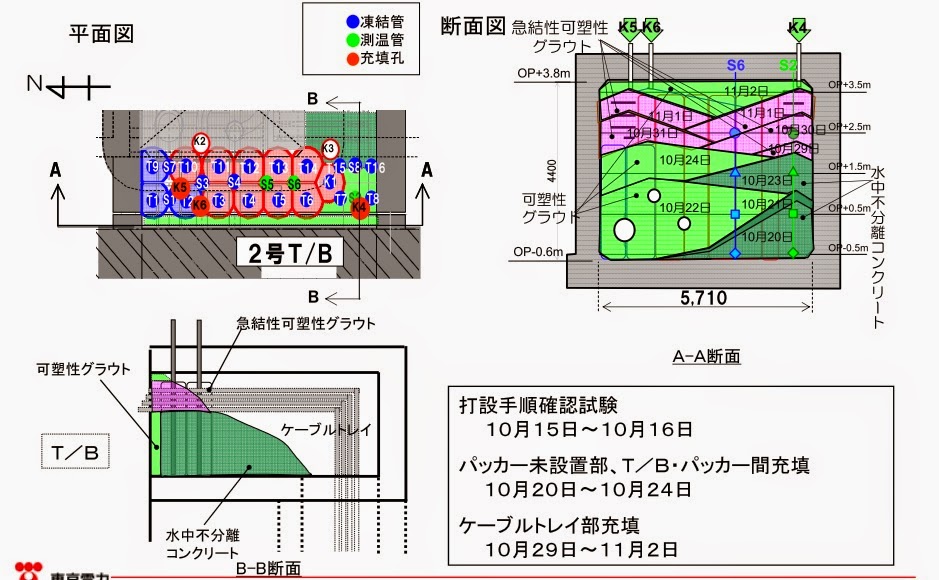
400 tonnes of groundwater go into the basements of the reactor buildings every day. The 14 wells to intercept that water can only divert about one-quarter of it. It is better than no diversion, but not by much.

TEPCO has been laying the pipes to transport the water from the wells to the ocean.

As a measure to decrease the amount of groundwater going into the reactor building, this is not much of a help, but it is precedent-making. Discharge of groundwater into the Pacific Ocean, albeit supposedly uncontaminated water for now, may start as soon as this month, with the local fishing industry set to approve the plan.

The TEPCO's true desire is no secret: to discharge water treated by ALPS (multi-nuclide removal system), clean of almost all radionuclides except for tritium, which there is no effective way to remove.

From Kahoku Shinpo (5/8/2013):

福島原発地下水、月内にも海へ 東電「安全性問題ない」

Groundwater at Fukushima I Nuke Plant to be discharged to the ocean this month, TEPCO says "No safety problem"

東京電力は福島第1原発の放射能汚染水対策として、敷地内でくみ上げた地下水を海に放出する方針を固めた。「汚染前の水で安全性に問題はない」とし、地元市町村や漁業関係者の了承を得て5月中にも踏み切る。

TEPCO plans to release the groundwater drawn from the wells inside the plant compound into the ocean, as part of the measures to deal with water contaminated with radioactive materials at Fukushima I Nuclear Power Plant. According to TEPCO, the groundwater is not contaminated as the water is drawn before it gets contaminated, and there is no problem of safety. After obtaining the approval from the local municipalities and fishing industry, the company will start [releasing the water] before May is over.

構内では大量の地下水が1~4号機の原子炉建屋に流れ込み、原子炉冷却水と混ざって1日約400トンの放射能汚染水がたまり続けている。放水対象は建屋に流入する前にポンプでくみ上げた地下水で、「放射性セシウム137の濃度は1リットル当たり1ベクレル以下で通常の地下水と変わらない」(東電)としている。

A large amount of groundwater leaks into the reactor buildings of Reactors 1-4, which then mixes with the reactor cooling water to generate about 400 tonnes of contaminated water per day. The water to be released into the ocean is the groundwater that is drawn by pumps [into the wells] before it reaches the reactor buildings, and according to TEPCO, "Density of cesium-137 is less than 1 Bq/liter, and it is no different from normal groundwater."

東電は13日の福島県漁連の組合長会議で方針を伝え、理解を求める。県漁連は「注意深く水質検査しながら行ってほしい」(野崎哲会長)と承認する考えだ。

TEPCO will announce the plan on May 13 at a meeting of the heads of the Federations of Fishery Cooperatives in Fukushima Prefecture, and try to win their understanding. The Federations' president (Tetsu Nozaki) is set to approve the plan, as he says "We would like [TEPCO] to proceed by carefully testing the water [for radioactive materials]."

渡辺敬夫いわき市長は「東電が『汚染されていない』と言っても消費者は理解してくれるのか。現時点では承知できない」と話した。

Takao Watanabe, Mayor of Iwaki City, says "Will consumers accept TEPCO's word that "it is not contaminated"? I cannot approve [the plan] at this point."


"At this point" is the key for Mayor Watanabe. He is free to change his opinion on May 13, or any other day. He can also join other mayors and farmers and fishermen in Fukushima Prefecture in crying "baseless rumors" by ignorant consumers.

Triump Japan Introduces "Branomics" Bra, Guaranteed to Increase the Seeming Volume by 2%


No, April Fool's Day was on April 1.

I thought it was a joke or fake news until I saw the bra maker's spokeswoman who looks bored to death explaining how wonderful the new bra is, how it matches the new era of (seeming) prosperity under Prime Minister Abe.

At the height of the real estate bubble in Japan in the 1980s, I don't think I saw anything like this.

News clip from NTD TV:


I thought ANA's maid cafe video was bad enough.

Three miniature arrows under the girls' golden bras have tiny tags that say "intelligence", "prosperity", and the third one which is covered by "triump" tag and I can't read; they are to signify the three core policies of so-called "Abenomics".

"2%" of course refers to the avowed target of inflation that Abe and Kuroda want to unleash on the Japanese public and which is sold as "price stabilization". Just as these girls look to be in need of more than 2% boost, Japanese consumers have already been hit with price increases far greater than 2% on certain items (McDonald hamburger, for one, toilet paper for another).

But as Tyler at Zero Hedge (who has this video) says,

The analogy of an exogenous force maintaining a natural force at an unsustainable size is just too easy - as, just as in the real-life, at some point that 'supportive bra' of monetary policy has be removed.


So what's next? Is there any plan for men's underwear?

Wednesday, May 8, 2013

Bloomberg News: Kuroda's Antics Backfire, as Mortgage Rates and Corporate Lending Rates Go Up in Japan


You will never see an article like that in today's Japan on any paper. How dare you call Governor Haruhiko Kuroda's action a failure? It's all for us, our well-being, our future!

Volatility in Japanese Government Bonds (JGB) that Kuroda has unwittingly introduced in April is causing the investors to demand premium to compensate for the volatility, thus the rates rise. That's not what Kuroda or his boss Prime Minister Abe intended.

Federal Reserve's Ben must be chuckling, and saying under his breath, "Amateurs..."

Bloomberg News (5/7/2013; emphasis is mine):

Kuroda Stimulus Backfires as Mortgage Costs Rise: Japan Credit

By Masaki Kondo, Mariko Ishikawa & Yumi Ikeda

Bank of Japan Governor Haruhiko Kuroda’s stimulus policies are backfiring in the housing market, where mortgage rates are rising even as the central bank floods the financial system with cash.

While 35-year home-loan costs rose one basis point to 1.81 percent this month from an all-time low of 1.8 percent in April, any increase will be undesirable for the BOJ, according to Mizuho Securities Co. Federal Reserve Chairman Ben S. Bernanke’s monetary easing almost halved 30-year U.S. mortgage rates since 2008 to 3.35 percent on May 2.

The BOJ’s April 4 announcement that it would double bond buying to generate 2 percent inflation unleashed the highest government-debt volatility in a decade and pushed 10-year yields up by 4 1/2 basis points. The benchmark lending rate for large corporations, known as the prime rate, increased five basis points from its record low to 1.2 percent on April 10, despite the BOJ’s aim of stoking the economy through cheaper funding.

“It makes little economic sense for rates to decline when the BOJ says it will raise consumer prices,” said Toru Suehiro, a market economist in Tokyo at Mizuho, one of the 24 primary dealers obliged to bid at government debt auctions. “Yields are higher than before the monetary easing to reflect the volatility risk, and lending rates have risen because they are set based on bond yields.”

Volatility, as measured by the gap between the 10-year yield’s daily high and low, jumped to 30 1/2 basis points on April 5, the most since July 2003, after Kuroda unveiled a plan to buy more than 7 trillion yen ($70.7 billion) of Japanese government bonds a month, accounting for more than half of the total amount that the government plans to sell in the market this fiscal year.

“The BOJ’s buying is reducing the liquidity of government bonds, preventing market participants from finding appropriate yield levels,” said Satoshi Okagawa, a senior global-markets analyst in Singapore at Sumitomo Mitsui Banking Corp., a unit of Japan’s second-largest financial group by market value. “That situation will make the market dependent on the BOJ’s purchases just like a morphine addict.”

(Full article at the link)


The US primary dealers wouldn't be able to do without that morphine from the Fed.

4 and a half basis points is 0.045%. What's the big deal, you may ask? Well, if Japan's 10-year bond yield was 0.5% before Kuroda's intervention, it was 9% jump in the yield. That's huge for bonds.

By the way, after breaking just about every financial market with his enormous liquidity, Federal Reserve Chairman Bernanke won't be attending the annual Jackson Hole confab of world's central bankers this year. Rumors is that he won't be seeking the next term.

(If and when SHTF, Kuroda will get the blame, I suppose.)

Tuesday, May 7, 2013

"Depleted Uranium Used by Israel" in Bombing Outside Damascus, Syrian Military Official Alleges


From Jerusalem Post quoting Russia Today (5/6/2013):

'Israel used depleted uranium shells in Syria'

Israel used depleted uranium shells in the alleged strike in Syria on Sunday, a senior Syrian military source told Russia Today on Monday.

"When the explosion happened it felt like an earthquake, then a giant golden mushroom of fire appeared. This tells us that Israel used depleted uranium shells," the source said.

Depleted uranium is a byproduct of the production of enriched uranium for use in nuclear reactors. It is 2.5 times as dense as steel, which allows it to penetrate heavy protection. The material is known to be toxic, but not dangerously radioactive.

Syrian state television claimed the bombing occurred around a military research facility at Jamraya. The New York Times reported that the strike also targeted the bases of the elite Republican Guard and storehouses of long-range missiles.
The senior official speaking to RT downplayed the strategic importance of the weapons targeted in the attack, saying the military losses were "negligible" and that valuable equipment was removed from the site of attack after a previous strike.

"The target was just an ordinary weapons warehouse. The bombing is an ultimatum to us – it had no strategic motivation," he was quoted by RT as saying.

A Western intelligence source told Reuters the attack targeted "stores of Fateh-110 missiles that were in transit from Iran to Hezbollah," while a senior Hezbollah source denied to Kuwaiti daily Alrai on Monday that the weapons targeted belonged to his organization.

(Full article at the link)


It is interesting, almost amusing, that the Israeli newspaper quotes all these news sources in describing the attacks allegedly by Israel. The Israeli government remains silent on the attacks.

Meanwhile, contradicting what the US administration has been saying (and still saying, as of Monday), the UN investigators say it may have been the rebel forces in Syria that used sarin gas, not the Assad regime.

Monday, May 6, 2013

Long Shadow of Chernobyl (3): Dried Mushrooms from Italy Still Found With 170 Bq/kg of Cesium-137


One of the scientific researchers that I follow who goes by the name of "Tomynyo" on Twitter has been measuring all sorts of things after the Fukushima nuclear accident - soil accumulated on top of his apartment complex in Yokohama City with high levels of radioactive cesium to bamboo shoots and mushrooms served in the kindergarten lunch.

His latest tweets is not about the domestic mushrooms but about mushrooms from Italy:

イタリア製のボルチーニ茸6検体を測定したところ全ての検体からセシウム137が検出されました。 最大は170.3±18.0Bq/kg、最低は31.6±6.2Bq/kgでした。スーパーの乾椎茸はほとんど九州産ですから、普通に買える乾椎茸より汚染されていると思います (link)

We measured 6 samples of [dried] Italian porcini mushrooms, and all samples were found with cesium-137. Maximum was 170.3±18.0Bq/kg, and minimum was 31.6±6.2Bq/kg. Dried mushroom you buy at a supermarket are almost all grown in Kyushu, so we think these Italian mushrooms are more contaminated than the dried Japanese mushrooms you can buy at a supermarket.

ボルチーニは水戻しした場合セシウム濃度は1/4になるそうです。... 3.11以前からそれなりの汚染された食品食べていた可能性があることは認識すべきです。(link)

If porcini mushrooms get rehydrated, the density of radioactive cesium would be one-fourths, we are told. We should recognize that we may have been eating food with certain levels of contamination even before March 11, 2011.


Just like the wood pellets from trees in Shikoku, Japan tested by one of my Twitter followers, cesium-137 is most likely from the atmospheric testing and the Chernobyl accident.

I happened on this video, supposed to be the raw footage of Chernobyl soon after the accident. I got scared watching workers with scant protection dumping loads of what looks like concrete debris:


Other "Long Shadow of Chernobyl" posts:

Long Shadow of Chernobyl: 224 Bq/kg of Cesium-137 in the Ashes from Burning Wood Pellets Made from Trees in Shikoku

Long Shadow of Chernobyl (2): German and Belarusian Researchers Say 64% of 229 Belarusian Children with High-Risk Thyroid Cancer in Complete Remission, 30% in Near-Complete Remission